Corporate Consequences

Our daughter has grown up an only child. She doesn’t know what it’s like to get lumped into the misdeeds of a sibling or to draw someone else into your own shenanigans. She gets rewarded or punished and receives mercy or grace on her own.

When she got home from school today, she played teacher. I noticed that she was disciplining her stuffed animal students in a clear warning/time-out/severe punishment scale. I asked her if she had gotten in trouble today.

No, she explained. But then she had to explain. “If someone does something and our teacher has to say something enough times, we all get punished.”

Apparently today was one of those days. The teacher had to warn the class too many times, and the entire class had to lay their head down three separate times.

In general, I think it’s good for my daughter to learn this lesson when the stakes are low: sometimes you suffer the consequences of someone else’s poor decision. You are not an island. You are part of group.

I also hope that it prompts this thought in my daughter: “I’m not going to do anything that would get someone else in trouble.” That would a be a great life rule for a six-year-old to put into practice.

Jokes

Today, I started what I hoped will be a new habit with my daughter: teaching her a joke.

My reasons:

  1. She’s been telling the same stale jokes from one episode of PBS kids show she watched two weeks ago, and I’ve about had it!
  2. Most jokes are short, and she can memorize them easily.
  3. Jokes provide a nice performance element for grandparents and other relatives.
  4. She really likes telling them.

Today’s joke?

“Why did the teddy bear refuse dessert?”

“He was stuffed!”

Our daughter has two beloved teddy bears, so she readily adapted the joke (i.e. “Why did Almondine refuse dessert?”). More than that, we talked about what made the joke funny (or clever or amusing or simply cute): the dual meaning of “stuffed.” We also talked about why the joke wouldn’t work if you said “Why did my stuffed bunny refuse…?” That’s because “teddy bear” lets you know the animal is stuffed without having to use the word “stuffed.”

She’s only told it once so far. We’re off to a good (and groan-worthy) start. Let the puns begin!

Legos

Today was my daughter’s birthday party. She received many gifts (Barbie accoutrement, Legos) that required assembly. It was a chance to see her at work and to see how she handled adversity in the midst of learning.

She spent nearly four hours assembling various Lego sets. The sets all contained pictorial instructions. Her work on these sets occasioned many good moments.

  1. She achieved a flow state. She was working at a level just beyond her comfort zone but was actively engage in such a way that she basically lost track of time.
  2. She asked for help when she needed it.
  3. She had to constantly problem solve in order to put some relatively complex sets together.
  4. She finished the day with a sense of accomplishment. She was able to see what she had made.

The downside:

  1. Occasionally she would get frustrated, and her fixed mindset language would come out. “This is hopeless. I’ll never be able to do this.”
  2. Asking for help is good. Relying on help to solve every difficult problem is bad. I don’t know that I helped solve this conundrum.
  3. She’s not interested in figuring out new and creative Lego creations. She wants to follow the directions, and that’s it. Once they’re made, they’re made. My question: was today the most she will ever play with these Legos?

I led a day camp this summer and had a chance to see firsthand how much flow-state Legos could occasion. I am going to try and guide Catherine towards more creative, less instruction-guided, free-play with them.

Loose Tooth

My daughter is six now, but she has yet to lose her first tooth.

She has a bottom-front tooth that is ready to break out of its rusty cage and run. My wife wants to pull it out. I would pull it out if called upon.

But our daughter is scared.

And so the afternoon was spent deploying various methods of persuasion:

  1. You’ll get cash (positive benefit)
  2. You won’t feel any pain (absence of a potentially bad effect)
  3. Your cousin did it (social proof!)
  4. You’ve never lost your teeth before. We have. You’ll be fine (invoking authority)

The truth? She likes the attention. The longer she keeps the tooth, the longer she can get her mama to look at it and play with it.

For my daughter, that’s the biggest benefit of all. We had a vague sense of this, but we got another lesson on it this afternoon.

Picture Books

My wife and I often sing The Kinks’ song “Picture Book.” It features the line, “Picture book, pictures of your mama, taken by your papa a long time ago.” Picture books for children feature drawings, though, and so I had both this song and children’s books on my mind as a result of a project my wife worked on with my daughter.

Yesterday while I was at school teaching, my wife and daughter started making two picture books. One contained memories of my daughter’s preschool. The other contained features of our neighborhood. I was blown away by both of them.

The preschool book is finished. It has sixteen pages, each with a picture my daughter drew recording something she remembered from her two plus years at the school. My wife helped only in prompting the ideas for various pictures. All the drawings were my daughters. They included:

  1. My daughter and her best friend
  2. The playground
  3. The headmaster
  4. Three of my daughter’s other friends
  5. A stage with performers from one of her Christmas programs
  6. My daughter in her leopard costume from last Halloween
  7. A picture of two kids looking at an airplane (apparently, planes flying to and from Greenville’s airport frequently flew over the school)
  8. A picture of her soccer coach and two kids kicking a soccer ball
  9. A picture of three kids at a lunch table

(She’s started doing this thing with characters’ eyes where she signifies someone’s happiness with these symbols: “^ ^”. If they are winking, they get “^ ~” for their eyes. I love it.)

She’s not done with the neighborhood book yet, but it features some keepers too.

I don’t know if she understands what a cool memory book this is. My wife was prompted to do the project with her because they are doing something similar at school this week while my daughter is quarantined with COVID exposure. I have little doubt that she would have done a better job with the project had she been at school.

My daughter draws A LOT. Many of her drawings are sketches and are consequently scrappable. If my daughter doesn’t want to keep these picture books, however, I will.

Infinite Games

My daughter was on campus with me this morning. As she listened to this Old Town School of Folk Music record and leafed through some books I got her from our campus library, I read this post from Seth Godin titled “The Modern Curriculum.”

I spent the rest of the morning contemplating what it would look like to implement this kind of curriculum at home with my daughter.

This afternoon, we played catch with a toy football she received for her birthday. On one level, I was impressed with her catching and throwing ability. On another level, I had Godin’s post in the back of my mind because a game of catch is an example of an infinite rather than a finite game.

Finite games have winners and losers. They come to an obvious end.

Infinite games can go on forever. The point is not necessarily to win but to keep playing.

Catch, I told my daughter, was a great game because both of us could do it well. The point wasn’t to “win” the game. It was just to keep playing.

We talked about the day while we continued to play. I really enjoyed it, and she did too. I hope this is the first of many days of infinite games.

Learning by Liturgy

My daughter is home for the week because of COVID exposure at school. While I was at school teaching, my wife was at home with our daughter. Apparently, the pair played a lot today.

The most elaborate part of their play involved church. My daughter dictated a bulletin to my wife complete with announcements, a call to worship, hymns, and two (apocryphal) scripture readings.

Some highlights:

  1. The call to worship which featured the image, “The Lord is my anchor.”
  2. A reminder that the men’s breakfast is next week at 8am
  3. A children’s story
  4. An OT passage about Jacob and Esau featuring the verse, “I will only give you this stew if you give me my inheritance.”
  5. A NT passage about Jesus’s baptism that included the verse, “If you do not baptize me, I will not fulfill God’s words.” It also featured the statement, “The clouds parted and God flew down like a dove.”
  6. A sermon delivered from my daughter to my wife.

Worship is spiritual education. It begins at home. My wife and daughter were busy learning outside of school today.

Birthday

My daughter turns six today.

During the past year, she’s had a series of firsts. They include her first…

  1. Bicycle
  2. Pet
  3. Experience reading all by herself
  4. Adventure standing in the Atlantic Ocean
  5. Graduation (from Pre-K)
  6. Day of kindergarten

This morning, she went out with me for a birthday donut and to give my wife some time on her own. On the way home, I let her watch a Beginner’s Bible video about Jesus’s miracles. Each episode of the show features a song. This afternoon, she was on the couch watching my wife do some stitching. Quite unprompted, she sang from memory the song about Christ’s miracles.

She amazes me every day, and I’m most grateful for the fact that she’s shown a desire to learn more about God this year. I pray that God will give me the strength to be a father who trains her up well.

Swallowtail Caterpillars

Though I’ve spent a lot of time with my daughter the past few days, I don’t know that I’ve done any official teaching. Yesterday, in just half an hour, my wife led my daughter in a brilliant science lesson.

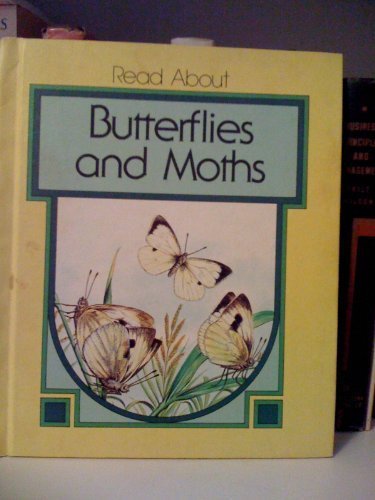
There are a host of black caterpillars crawling on the remains of our sunflowers. While my daughter helped my wife remove the seeds from these dying flowers, they discussed what kind of caterpillars they were. They got out a book that had belonged to my wife when she was a child: Read About Butterflies and Moths. The caterpillars looked they were Swallowtails.

A quick check on the internet confirmed their hypothesis. It also showed that the caterpillars had two features to protect themselves: horns they display and an odor they emit when scared. My wife and daughter proceeded to prod the caterpillars on the bottom. They saw the horns. They smelled the odor. It smelled like parsley, the odor of the food they like to eat (and which birds will not eat).

My daughter loved learning with her mom. I hope I can find teaching moments like this next week.